




Tilmeld dig vores nyhedsbrev
Få de bedste opskrifter, tips fra kokkene og nyheder om alt det der spirer i Meyers' univers.
With March, spring slowly begins to stir. The light returns, the days grow longer, and on the forest floor, the first tender green signs of a new season begin to emerge.
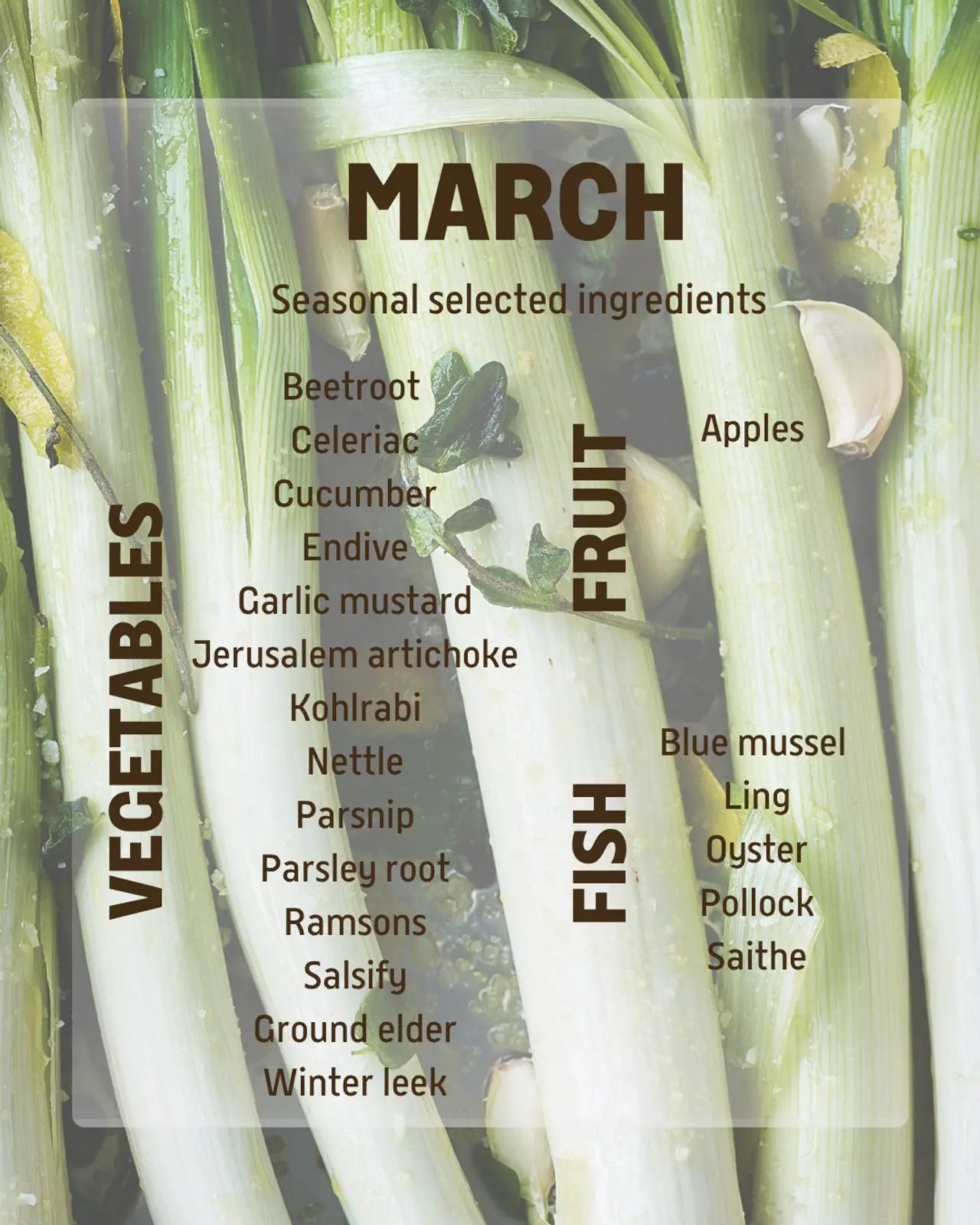
In the kitchen, we find ourselves in the middle of the transition between winter and spring. The last root vegetables from winter storage are still holding on: celeriac, beets, Jerusalem artichokes, and parsnips add depth and substance to dishes. At the same time, the first wild herbs begin to appear, bringing freshness and green life to the plate.
From the sea, you can still find plenty of excellent fish such as herring, hake, and cod, which are well suited for both light dishes and more substantial meals.
When we eat according to the season, we hit something that both tastes better and makes sense. The ingredients are fresher, more climate-friendly, and often cheaper. And perhaps most importantly: we experience the rhythm of nature through what we eat.
Today, we can get almost all fruits and vegetables year-round because much is imported from Southern Europe or even farther away. This can make it difficult to determine when ingredients are actually in season.
But there is a world of difference between a sun-ripened Danish ingredient and a greenhouse-grown vegetable transported over long distances. When we eat seasonally, we get both better flavor and more variation in the kitchen.
Here are five good reasons to eat seasonally:
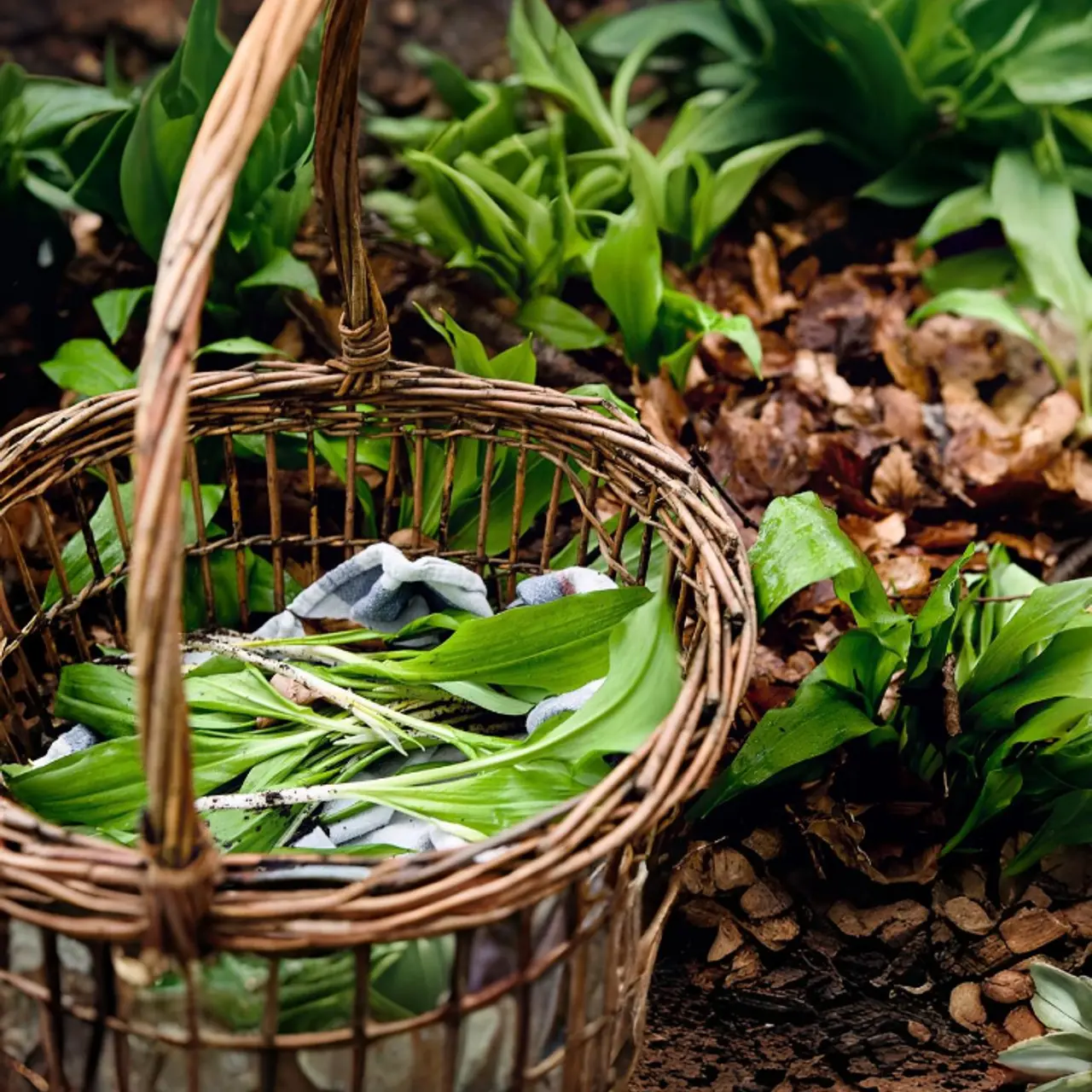
March is the month when nature starts to wake up. The first wild herbs break through the forest floor and give us a welcome burst of green after a long winter.
Three of the most exciting ingredients at this time are wild garlic, ground elder, and garlic mustard.
Wild garlic is one of the first wild plants to appear in Danish forests. The broad green leaves have a strong garlic aroma and can be used in everything from pesto and butter to soups and salads.
They are intense in flavor, yet fresh and green, clearly signaling that winter is on its way out.
However, be careful when foraging: wild garlic can be mistaken for lily of the valley, which is poisonous. A reliable way to tell them apart is that wild garlic leaves smell distinctly of garlic when rubbed between your fingers.
Many gardeners know ground elder as a stubborn intruder in their beds. But the young spring shoots are actually a fantastic ingredient.
The flavor resembles a mild blend of parsley and spinach, and the leaves can be used in salads, soups, pesto, or quickly sautéed dishes. The younger the leaves, the milder and more delicate the taste.
So next time you see ground elder in your garden, you might as well eat it.
Garlic mustard is a more subtle yet incredibly aromatic spring herb. The leaves have a mild flavor of both onion and garlic with a hint of mustard.
It works especially well as a fresh herb in salads, on open sandwiches, or tossed into warm dishes just before serving, where it adds a lift of green freshness.
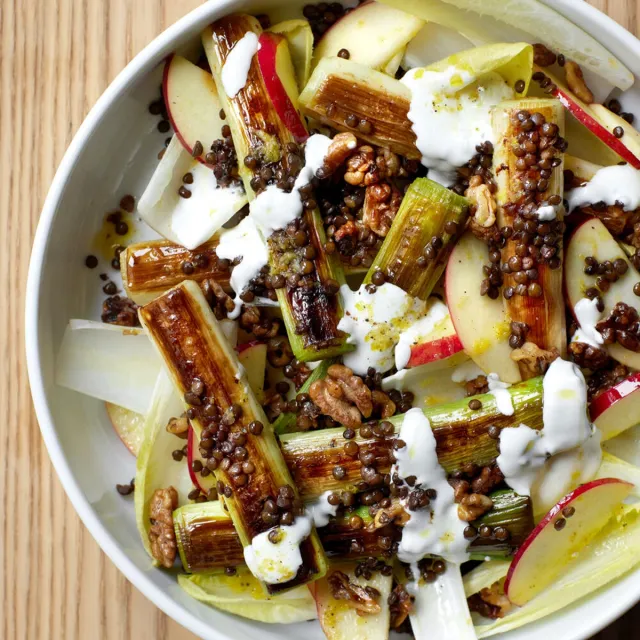
It may not take center stage, but the leek is one of the winter kitchen’s most reliable ingredients. Mild, aromatic, and with a natural sweetness that emerges when given time and heat in the pan or oven.
Leek belongs to the same family as onions and garlic, but its flavor is rounder and more elegant. When braised in butter, grilled until lightly charred at the edges, or simmered in soups and stews, it develops a depth that elevates the entire dish.
It also pairs beautifully with the first wild spring herbs. Wild garlic, ground elder, and garlic mustard give the leek’s gentle sweetness a green counterpoint that feels like a little piece of spring on the plate.
So even as tender shoots begin to appear in nature, the leek still plays an important role in the March kitchen - as a bridge between winter’s hearty dishes and spring’s fresh flavors.
As the first green herbs begin to appear, eggs are one of the ingredients that tie everything together.
The soft, golden egg has a natural richness that balances the aromatic flavors of wild garlic, ground elder, and garlic mustard. A fried egg with freshly chopped wild garlic, an omelet with tender ground elder shoots, or a soft-boiled egg topped with a bit of garlic mustard is simple food that tastes like spring.
Eggs are also one of the kitchen’s most versatile ingredients. They can bind a frittata, add body to a soup, or elevate a warm salad with potatoes and herbs.
And it is an ingredient that is almost always within reach. As winter loosens its grip and the first green leaves appear, the egg may be the most natural companion to the season’s new flavors.
Even though spring is emerging, March is still also the month of root vegetables. Celeriac, beets, Jerusalem artichokes, and parsnips have been stored cool and dark since autumn and have developed even more flavor.
They can still form the backbone of meals: roasted in the oven, puréed into soups, or tossed into warm salads together with the first spring herbs.
It is precisely in the meeting between the robust winter ingredients and the fresh green shoots that March truly comes into its own.
March is a transitional month. It stands with one foot in the depth of winter and the other in the lightness of spring.
In the kitchen, this means we can begin to let green herbs sneak into our dishes while root vegetables still provide substance and warmth.
And perhaps it is exactly in this transition that seasonal cooking is at its most exciting.
Hold dig opdateret
Få de bedste opskrifter, tips fra kokkene og nyheder om alt det der spirer i Meyers' univers.