


Tilmeld dig vores nyhedsbrev
Få de bedste opskrifter, tips fra kokkene og nyheder om alt det der spirer i Meyers' univers.

November is the quiet month. The light is scarce, the days are short, and we retreat indoors. Not only physically, but also in the way we cook. This is when the kitchen truly becomes a place we inhabit – not just a place we pass through. Ingredients no longer come directly from the fields in the same abundance. Instead, we begin to work with what lasts: what is stored, what is robust, and what benefits from being handled with care. This is when we cook food that is allowed to take time – and that gives something back.
We can get most things all year round, but that does not mean they taste as they should.
When ingredients are allowed to fully ripen in their own rhythm and are harvested when they are actually ready, you can taste the difference.
At the same time, it often comes with a lower climate footprint and less transportation.
Here are five good reasons to eat seasonally:
In November, the kitchen changes character.
It is no longer only about freshness, but about depth, shelf life, and the ability to build flavor over time.
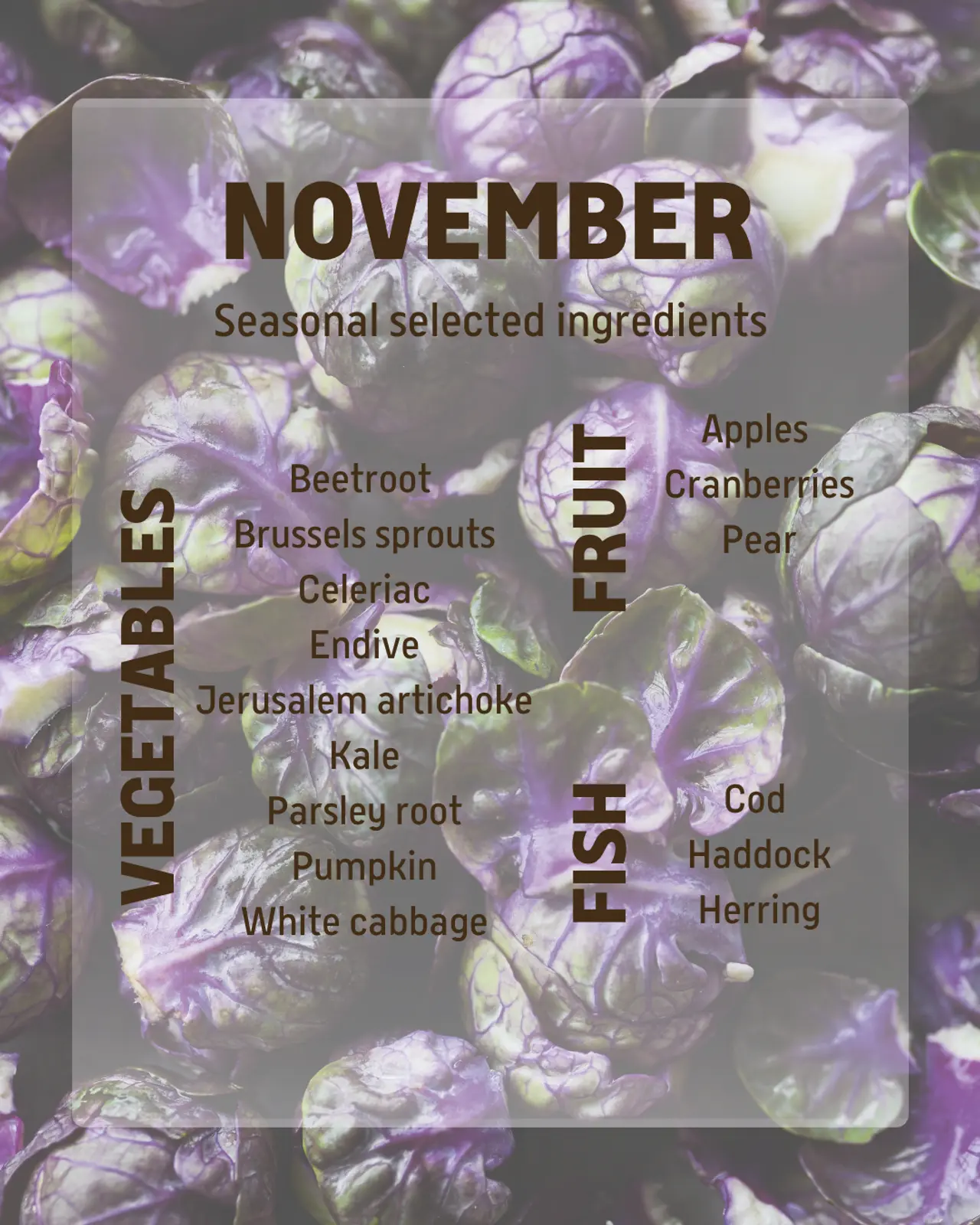
Four ingredients that truly define November:
Brussels sprouts only truly develop character once the cold sets in.
The small, dense heads become sweeter and less bitter, especially when given plenty of heat and fat.
Halve them, sear them hard, or roast them until crisp. This is where they begin to show what they can do.
As the water gets colder, fish becomes firmer and more flavorful. Herring, mackerel, and cod are at their best now. It is both healthy and more sustainable to put herring, cod, mussels, and other seafood favorites on the dinner table –and the fish that thrive in the cool waters around Denmark are actually some of the finest ingredients we have in the Nordic region.
In November, we begin to reach for what lasts. Beans, lentils, and chickpeas are not just a side – they become a foundation.
When soaked and cooked slowly, they develop both substance and depth. This is food that satisfies – and that brings the meal together.
Onions may not stand out, but in November they are indispensable. They sit at the base of almost everything – and only get better with time and heat.
Slowly sautéed or caramelized, they bring sweetness and depth that bind dishes together.
In November, storage plays a crucial role in flavor.
Many ingredients change character during storage. Starch is converted into sugar, and the flavor becomes rounder and more complex. At the same time, ingredients lose some water, which further concentrates the flavor.
That is why November is an ideal month to work with slow cooking and repetition, where flavor is allowed to develop over time.
November is not just a month for cooking.
It is also when we begin to think in terms of storing. We pickle, preserve, reduce, and stretch ingredients a little further. Not out of necessity – but because it makes sense.
One pot becomes several meals. A stock becomes a base. A head of cabbage becomes both a salad, a braise, and perhaps something pickled on the side. This is a kitchen where repetition is not a weakness – but a strength.
Where flavor is allowed to develop from day to day. And where we begin to build a small reserve of good flavors to draw on when winter truly sets in.
Hold dig opdateret
Få de bedste opskrifter, tips fra kokkene og nyheder om alt det der spirer i Meyers' univers.