


Tilmeld dig vores nyhedsbrev
Få de bedste opskrifter, tips fra kokkene og nyheder om alt det der spirer i Meyers' univers.
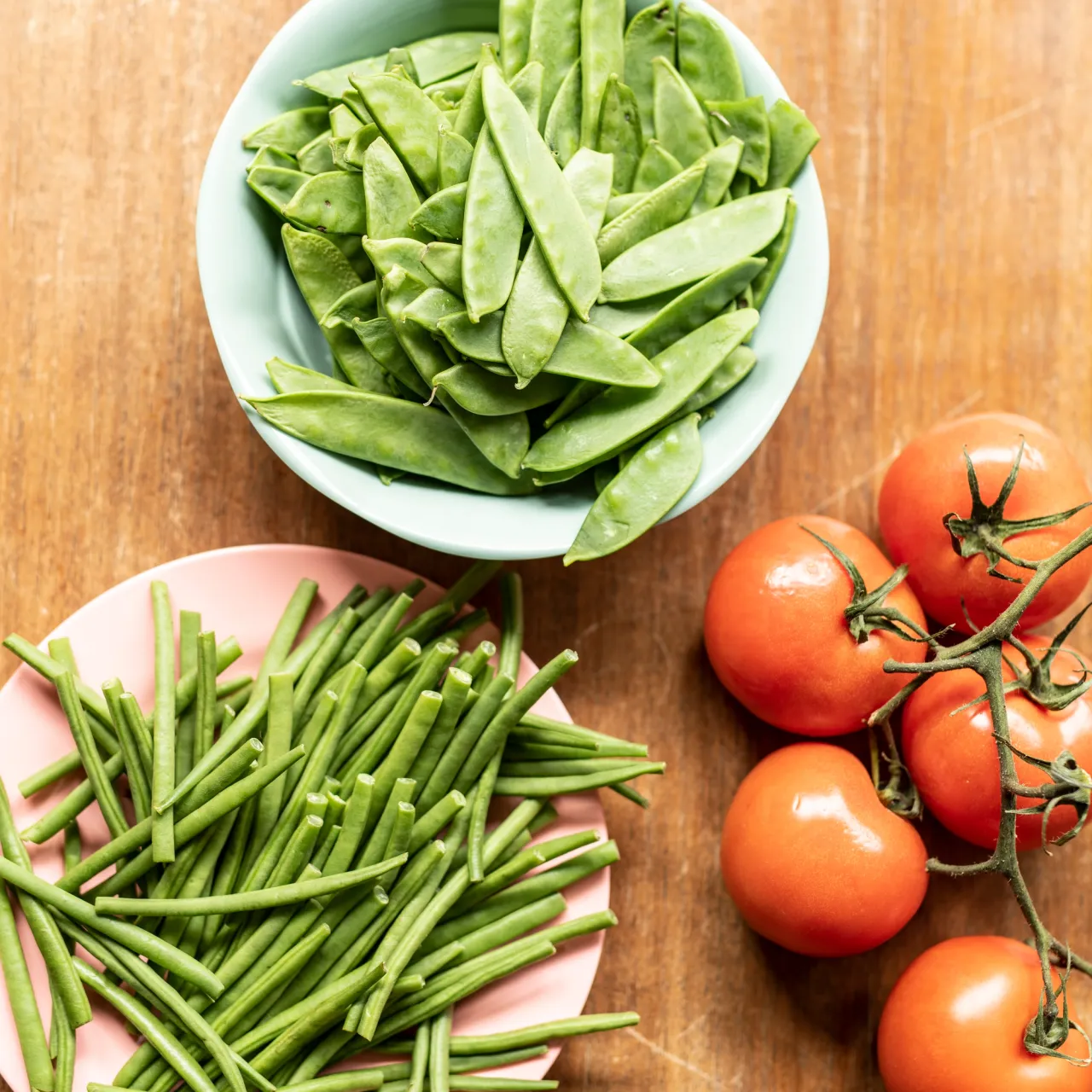
August is late summer. Still warm, still generous, but with a different kind of calm. This is when we begin to feel the season turning. The days are still long, but the light changes. And the ingredients do the same. They become heavier, sweeter, more concentrated. Kitchen gardens are still abundant, but now with a different weight. It is no longer just the fresh and crisp – it is also the ripe, the full-bodied, and what begins to point ahead.
We can get most things all year round, but that does not mean they taste as they should.
When ingredients are allowed to fully ripen in their own rhythm and are harvested when they are actually ready, something happens. The flavor becomes deeper, sweeter, and more rounded.
At the same time, it often comes with a lower climate footprint and less transportation.
Here are five good reasons to eat seasonally:
In August, we are still in the middle of summer, but something has changed.
It is no longer just light and airy. Now the ingredients begin to gain more body. More sweetness. More depth. This is when we begin to cook food that tastes of summer – and just a little of what is to come.
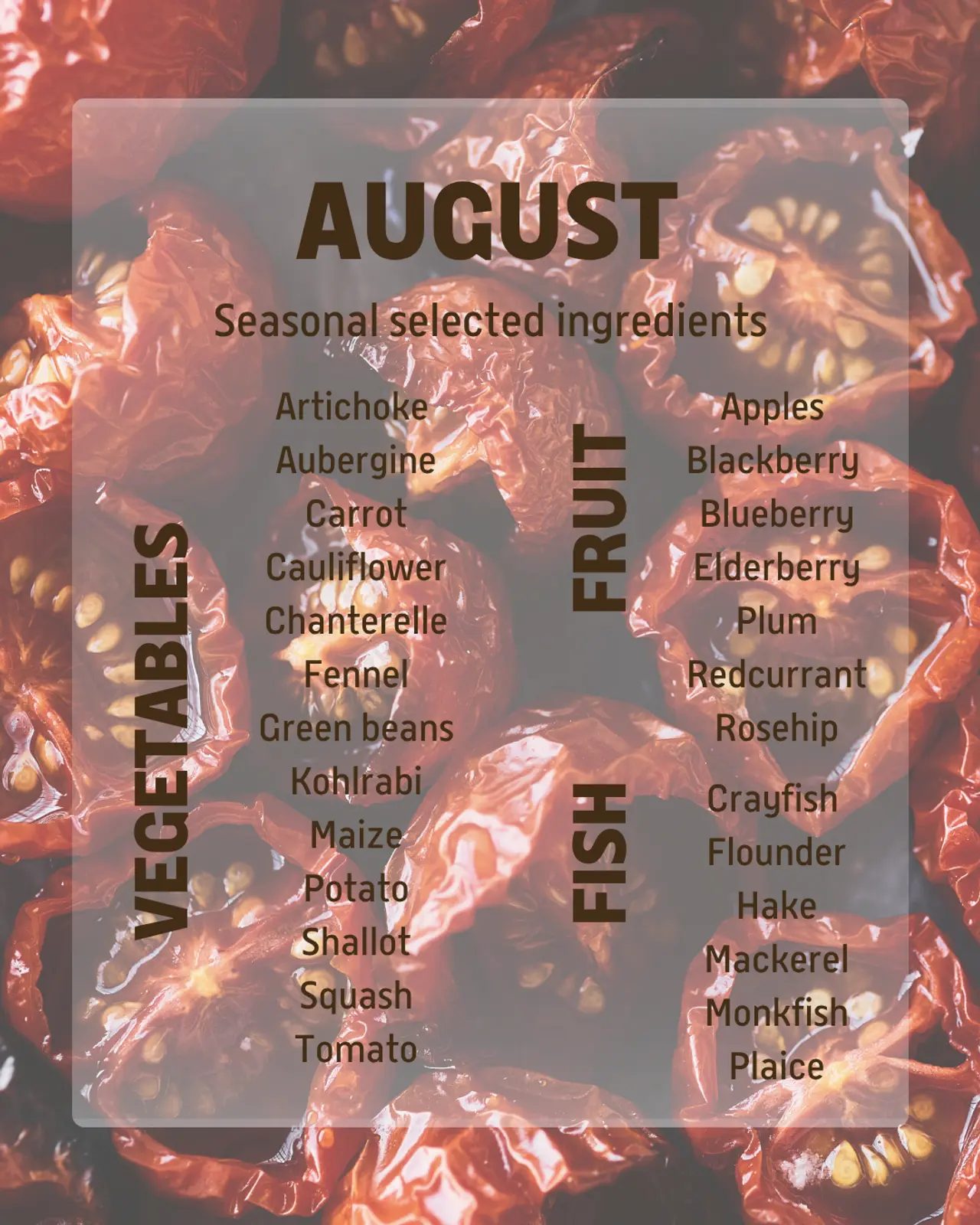
Four ingredients that truly define August:
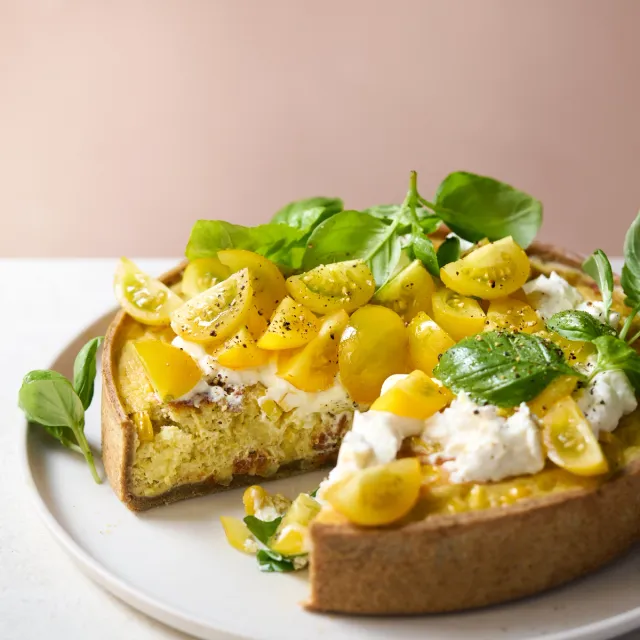
Tomatoes are still at their best, but in August they become even more concentrated in flavor.
They are perfect raw, but can also handle more: a turn in the oven, on the grill, or in a sauce where their sweetness is allowed to shine.
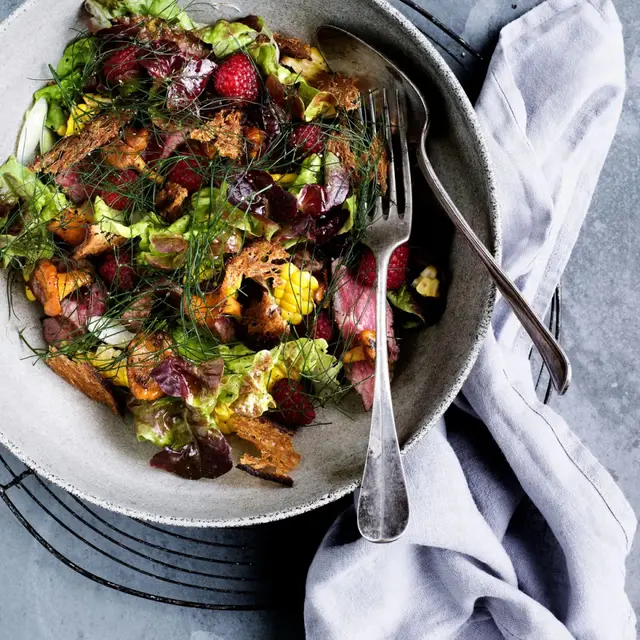
Fresh corn on the cob is one of the most summery things you can sink your teeth into.
Sweet, juicy, and with a slight crunch. Grill it, boil it, or cut off the kernels and use them in salads and warm dishes. It can carry both simple and more spiced flavors.
Corn is a relatively coarse vegetable and has a high content of dietary fiber, which helps keep you full and supports digestion. At the same time, corn has a high content of potassium, which is good for circulation.
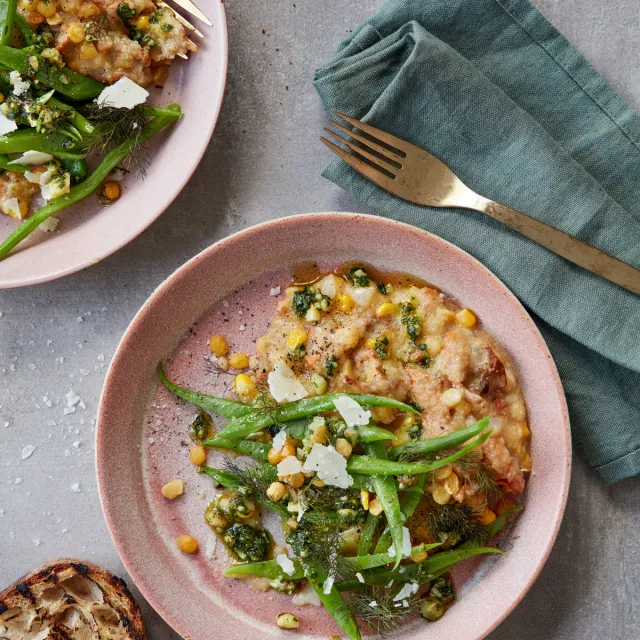
Plums mark the shift. They are sweet, slightly tart, and with a softness that almost melts. These beautiful fruits are ideal in, for example, pies, juices, jams, chutneys, and salads. Plums are related to peaches, apricots, and cherries and come in many different varieties. Depending on the variety, they can vary in size, firmness, color, and flavor.
Our cool climate produces highly aromatic, sweet plums with a good level of acidity, making them well suited for both sweet and savory cooking – paired with meat, cheese, or in salads where they provide contrast.
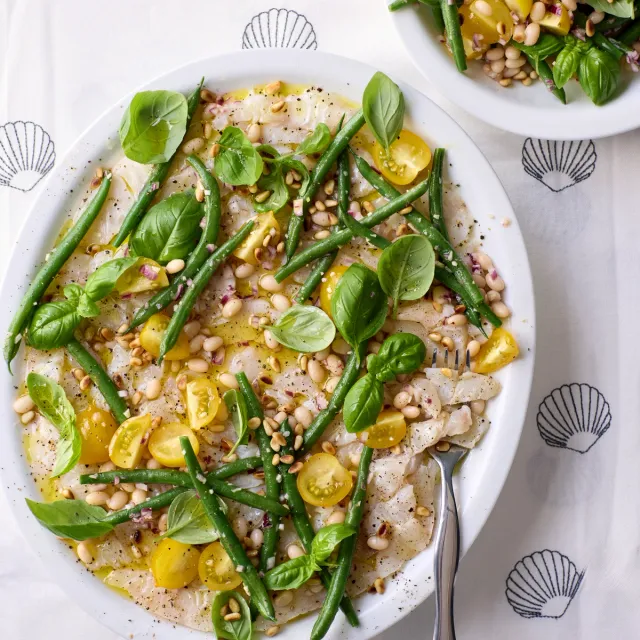
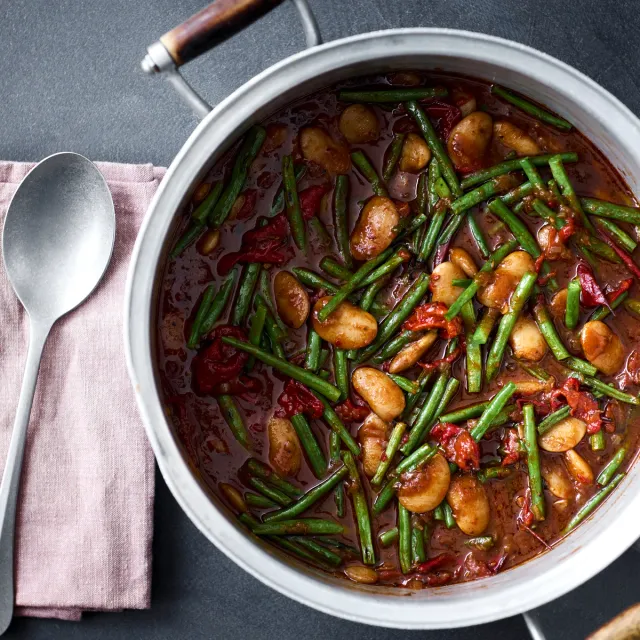
Beans are at their peak in August. They snap cleanly when bent and have freshness, but also substance.
Green beans are part of the legume family. They are harvested before the seeds inside fully develop, which is exactly why they are so crisp and juicy rather than mealy.
They contain both dietary fiber and a bit of protein, and as the season progresses, they also become more concentrated in flavor. It is here in late summer that they truly hit the balance between freshness and fullness.
Give them a short time in boiling salted water – 2–3 minutes is often enough. This way, they retain both color, bite, and flavor. You can also sear them hard in a pan or grill them to add a bit of smokiness and sweetness.
They act as a binding element on the plate. Together with tomatoes, corn, or plums, they help bring everything together.
When ingredients are allowed more time to ripen, their flavor changes character.
The sugar content increases, and the acidity often softens. That is why many late-summer ingredients are perceived as rounder and more full-bodied in flavor.
This is also when they are better suited for cooking – heat, baking, and grilling – because they can handle more without losing themselves.
“ August is the month when we still have summer ahead of us – but begin to feel that it will not last forever.
August is not just a month for eating. It is also when we begin to think about preserving.
Not necessarily in big projects, but in small actions. A pot of tomato sauce. A handful of berries in the freezer. Maybe some pickling, if the mood strikes.
It is not about preparing for winter. It is about extending what tastes good right now. And perhaps also about understanding that seasonality is not just something that comes and goes – but something we can carry with us.
Hold dig opdateret
Få de bedste opskrifter, tips fra kokkene og nyheder om alt det der spirer i Meyers' univers.