


Tilmeld dig vores nyhedsbrev
Få de bedste opskrifter, tips fra kokkene og nyheder om alt det der spirer i Meyers' univers.

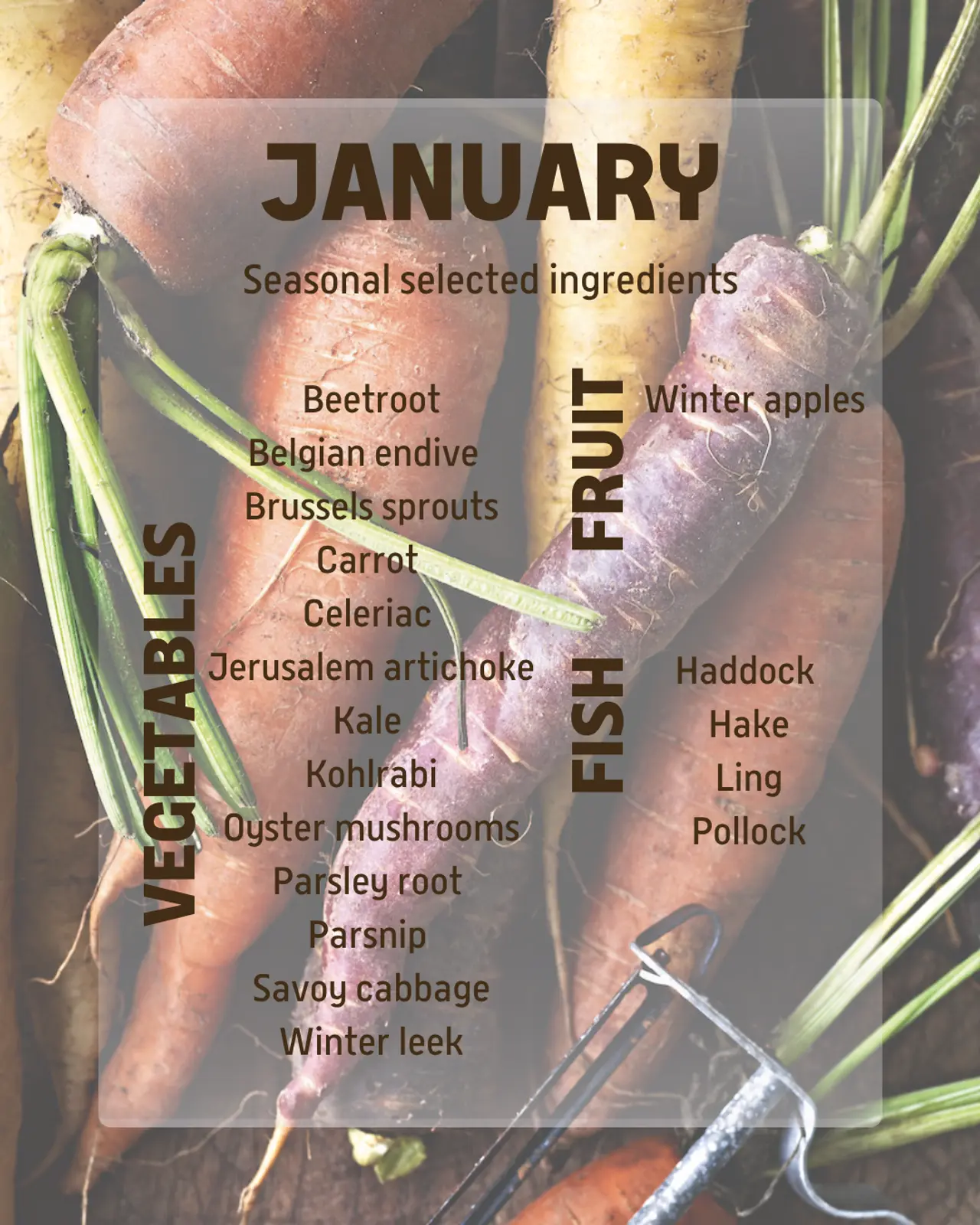
Perhaps you've started the new year with the ambition to eat a little greener. If so, following the seasons is a great place to begin. Seasonal produce is at its freshest, tastes its best and is often more affordable and nutritious. In January, the beautiful kale stalks are still standing tall in the kitchen garden. Beneath the soil, beetroot, parsley root and parsnips are ready to be harvested, while umami-rich oyster mushrooms are in abundance. Winter apples and pears are also at their best, crisp and full of flavour.
Today, you can buy almost any fruit or vegetable all year round thanks to imports from Southern Europe and South America. That can make it difficult to know when produce is truly in season. Yet there is a world of difference between a Danish field-grown tomato in August and a greenhouse tomato from Spain in February. Eating with the seasons not only brings out the best flavours, it also adds natural variety to your meals and gives you something to look forward to as the seasons change.
Here are five good reasons to eat seasonally:
Beetroot is perhaps best known as the pickled companion to traditional Danish open sandwiches or classic comfort food. But this vibrant root vegetable has much more to offer. In Russian cuisine, for example, beetroot takes centre stage in the national dish borscht, a rich and comforting beetroot soup.
Beyond its striking colour, beetroot is a great source of dietary fibre and vitamins, helping you stay full and support a healthy immune system.
Jerusalem artichokes are the wonderfully quirky root vegetable that looks a little like a cross between fresh ginger and a potato. The plant can grow up to two metres tall and is in season during the colder months, from September through April.
Originally from North America, Jerusalem artichokes have been cultivated by Indigenous peoples for thousands of years. They were introduced to Europe in the 17th century by French explorers and became widely popular in Danish kitchens during the 1980s. Today, they are especially loved in soups, but they are equally delicious roasted or baked in a gratin.
Besides their rich, nutty flavour, Jerusalem artichokes are an excellent source of dietary fibre. They are particularly high in inulin, a natural prebiotic fibre that helps support healthy blood sugar levels and gut health.
Sweet, crisp and full of crunch, carrots are one of the most versatile root vegetables. Enjoy them as a side dish, blend them into juices with other fruits and vegetables, or simply eat them raw as a quick snack. They also bring beautiful colour to the plate, especially when you mix purple, white, yellow and orange varieties.
Carrots are rich in vitamins and dietary fibre, much of which is found in the skin. Instead of peeling them, simply give them a good wash to enjoy all the nutrients and fibre they have to offer.
Hold dig opdateret
Få de bedste opskrifter, tips fra kokkene og nyheder om alt det der spirer i Meyers' univers.