

Tilmeld dig vores nyhedsbrev
Få de bedste opskrifter, tips fra kokkene og nyheder om alt det der spirer i Meyers' univers.
October is autumn in full force. The light is lower, the air sharper, and the kitchen moves fully indoors. This is when we truly begin to cook food that warms – not just the body, but also the rhythm around the meal. The ingredients are no longer tender or on their way. They are ready. Pulled from the soil, picked at full ripeness, and ready to be used – not only fresh, but also cooked, preserved, and refined. This is when we turn up the heat on the pot, the oven, and the time. We have gathered great ideas on how to bring October onto your dinner table.
We can get most things all year round, but that does not mean they taste as they should.
When ingredients are allowed to fully ripen in their own rhythm and are harvested when they are actually ready, you can taste the difference.
At the same time, it often comes with a lower climate footprint and less transportation.
Here are five good reasons to eat seasonally:
In October, there is no longer anything balancing between light and heavy.
Now it is the deep flavors that take over. What has grown all summer is now ready to be used – and cooked with heat, time, and care.
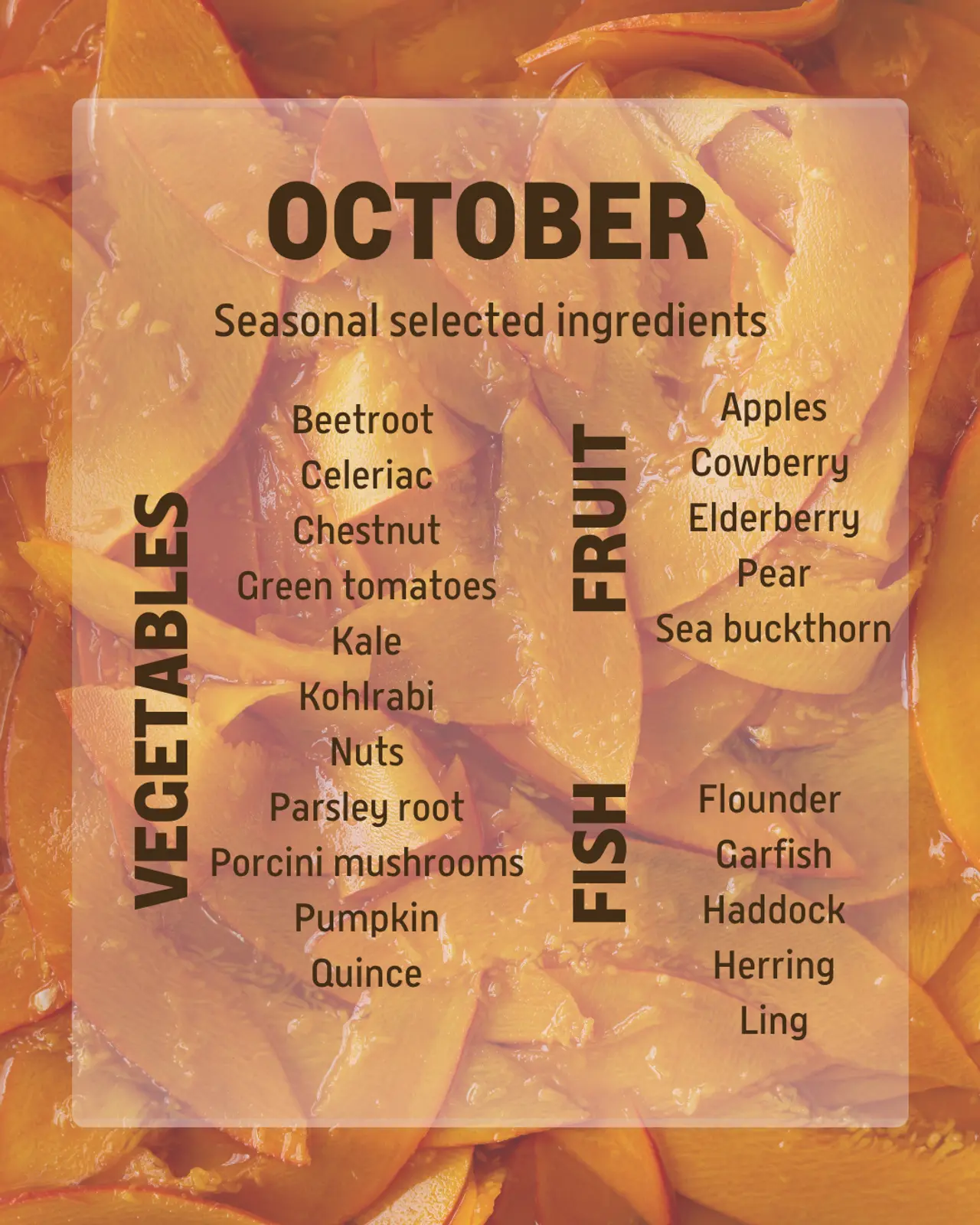
Four ingredients that truly define October:
Carrots, beets, celeriac, and Jerusalem artichokes now fill the kitchen.
They are dense, sweet, and full of structure. Roast them slowly in the oven so the sugars caramelize, or let them become part of soups and stews where they add both substance and depth.
Cabbage is in season – and at its best.
White cabbage, red cabbage, kale, and savoy cabbage bring both bitterness, sweetness, and bite. They can withstand both long cooking times and strong flavors.
Slice them finely, braise them, or let them soften in the pot. Cabbage is the backbone of the Nordic autumn kitchen.
Remember that cabbage is considered the oldest known vegetable, and ancient “cabbage gardens” even tell us that these resilient cabbages have kept us alive for more than 1,000 years.
Mushrooms are still here, but now with even more intensity.
Sear them hard so the moisture evaporates and the flavor concentrates. They add umami and depth – and can almost carry a dish on their own.
Pumpkin is October in a single ingredient. Soft, slightly sweet, and with a texture that works in everything from soups to baked dishes. The versatile, beautiful pumpkin comes in all shapes and colors and brightens the falling leaves when it lies in the garden. Let pumpkin take center stage in your cooking from now and for many months to come.
Roast it, mash it, or let it become part of dishes where it can bring everything together and round out the flavors.
“ Many associate pumpkin with Halloween, where it is hollowed out, carved with faces, and used as lanterns in gardens - but pumpkin is much more than that. It can be pickled, boiled, baked, puréed, steamed, and used in both savory and sweet cooking – only imagination sets the limits.
In October, many ingredients are at their peak in dry matter and energy content.
After a full season of growth, plants have stored sugar, starch, and nutrients in roots, tubers, and leaves. This results in ingredients with greater flavor intensity and better cooking properties.
This is why root vegetables caramelize more deeply, cabbage becomes sweeter with heat, and pumpkin develops a rounder flavor when roasted.
For you in the kitchen, this means:
The more you work with heat and time – the more you get in return.
In October, it is not only the ingredients that change – the way we cook changes as well.
We begin to work with time. Dishes are allowed to simmer. Vegetables develop color. Flavors are given time to come together and evolve.
It is not about making things more complicated. It is about giving the ingredients what they need.
Because it is here – in the meeting with heat, richness, and time – that the autumn kitchen truly unfolds.
Hold dig opdateret
Få de bedste opskrifter, tips fra kokkene og nyheder om alt det der spirer i Meyers' univers.