


Tilmeld dig vores nyhedsbrev
Få de bedste opskrifter, tips fra kokkene og nyheder om alt det der spirer i Meyers' univers.
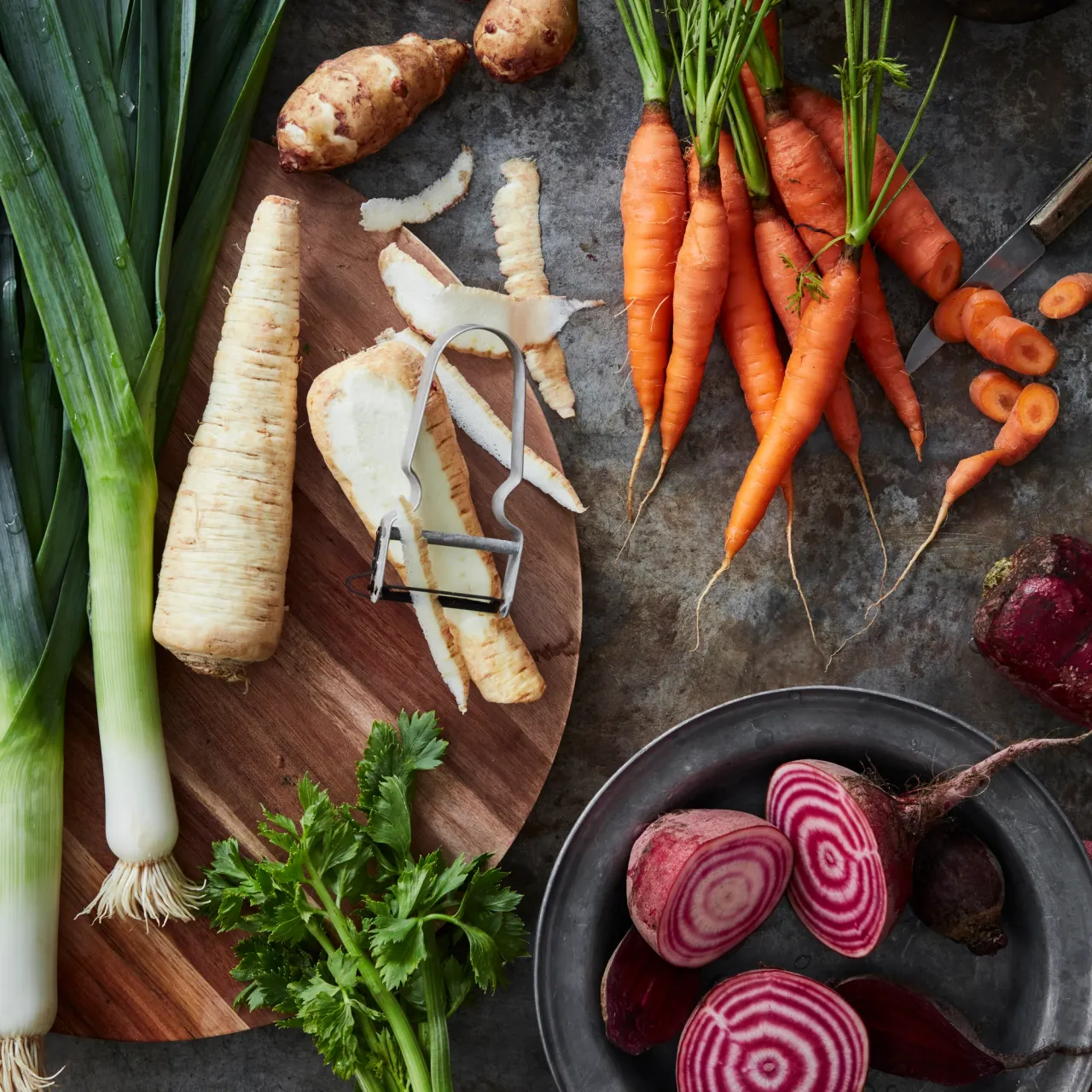
December is the most anticipated month of the year. The darkness settles in, but in the kitchen we light candles and begin to cook food that smells of something familiar. This is when Christmas moves in. Not just in the calendar, but in the flavors. In the spices, in the preparation, and in the dishes we return to year after year. We do not necessarily make something new – but we take care. The ingredients are a mix of what is stored, what is preserved, and what is specially selected. Some have been kept for a long time. Some have been saved just for now. This is when we cook food that tastes both of the season – and of tradition.
We can get most things all year round, but that does not mean they taste as they should.
When ingredients are allowed to fully ripen in their own rhythm and are harvested when they are actually ready, you can taste the difference.
At the same time, it often comes with a lower climate footprint and less transportation.
Here are five good reasons to eat seasonally:
In December, it is not only about what we eat – but how and why.
The flavors become deeper, the dishes richer, and meals take on a special meaning.
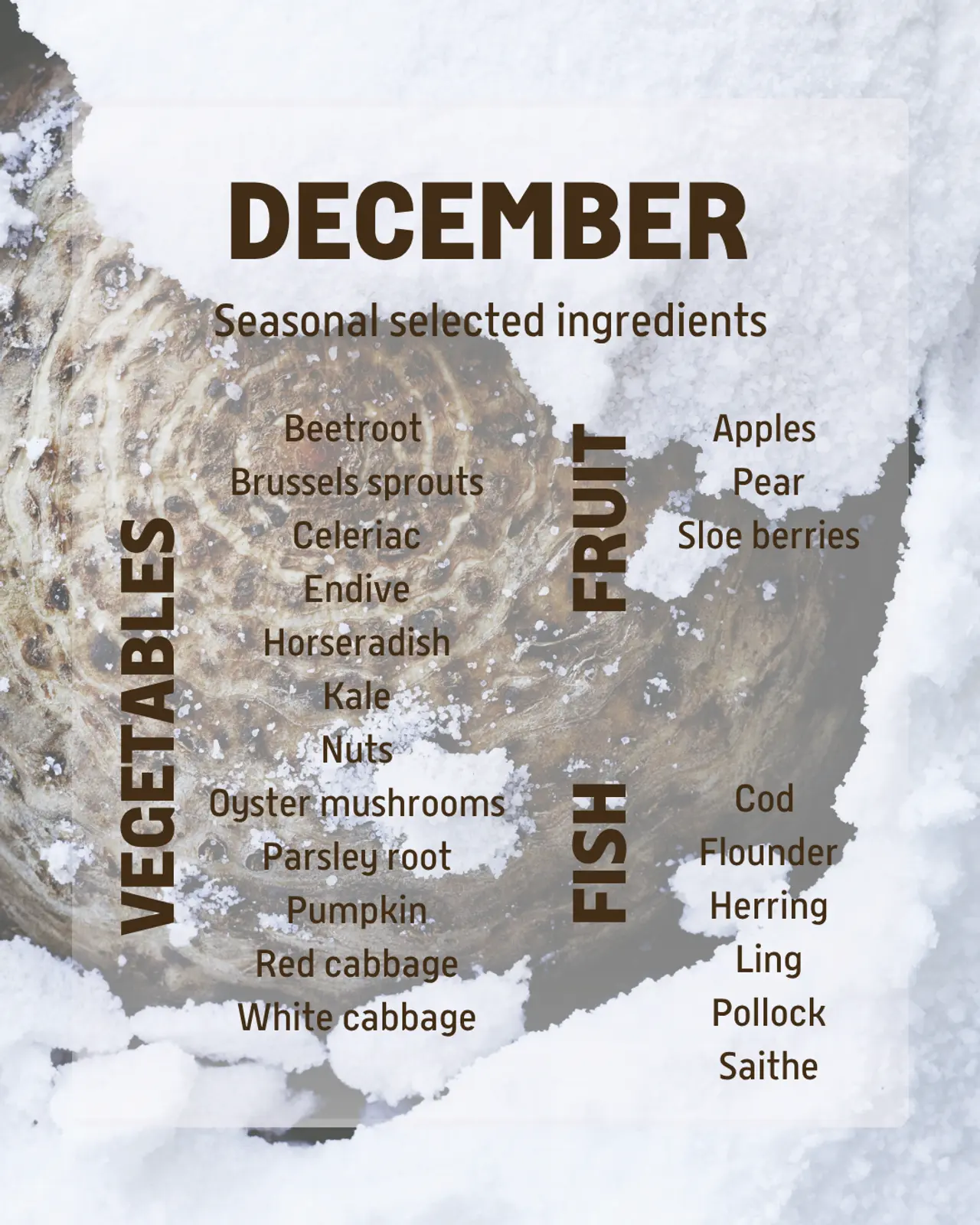
Four ingredients that truly define December:
Red cabbage is, for many, the very taste of Christmas. Slowly braised with acidity and sweetness, it becomes both deep and rounded – and acts as a counterpoint to rich dishes.
But kale and white cabbage also play an important role. They can be fresh, bitter, and crisp – or soft, sweet, and warm. Cabbage is what brings balance to the Christmas table.
No Christmas without herring.
The salty and tangy fish cuts through richness and brings lightness to the meal. Curry, onion, spices, and vinegar – these are flavors we return to year after year. At the same time, fish from cold waters remain among the best ingredients we have – both in terms of taste and sustainability.
Amid the classics, legumes find their place.
They add substance and satiety – and make it possible to think greener, even in December.
Lentils and beans can take on Christmas spices and work with acidity, richness, and sweetness alike.
Hazelnuts and walnuts are in season and play a bigger role than you might think. They add richness, structure, and a slight bitterness that balances sweetness and heaviness.
Toast them, chop them, or use them in both savory and sweet cooking – they elevate everything from cabbage to desserts.
Also remember that when December becomes heavy, we need something that cuts through. Oranges, lemons, and clementines bring acidity, freshness, and aroma into the kitchen. They balance richness and sweetness –and add lightness to the Christmas meal.
Many of the classic flavors of Christmas are created through preservation.
Salting, pickling, and storing have historically been necessary techniques in the winter months, but today they are part of what we associate with Christmas.
That is why we eat pickled herring, red cabbage, stored ingredients, and dishes that have been allowed to develop over time.
The flavor is not only in the ingredient – but in the work that has been done beforehand.
December is the month when we repeat ourselves – with joy. We cook the same dishes, use the same spices, and set the table in the same way as last year.
Not because we cannot think of something new, but because this is where food also carries something else: memories, anticipation, and togetherness.
This does not mean we cannot adjust, improve, or think greener. But it does mean we know what we return to.
And perhaps that is exactly what December can do: let food be something we share, not just something we eat.
Hold dig opdateret
Få de bedste opskrifter, tips fra kokkene og nyheder om alt det der spirer i Meyers' univers.