Recipe
The delicate bitterness of asparagus, its subtle aroma, its unique texture, and the way it snaps when you bite into it make it a favorite for many – and right now, the very first asparagus are beginning to push up from the soil. The fresh shoots pair beautifully with a creamy smoked cheese and some crisp salad leaves, on a piece of good bread or in a creamy tartlet.
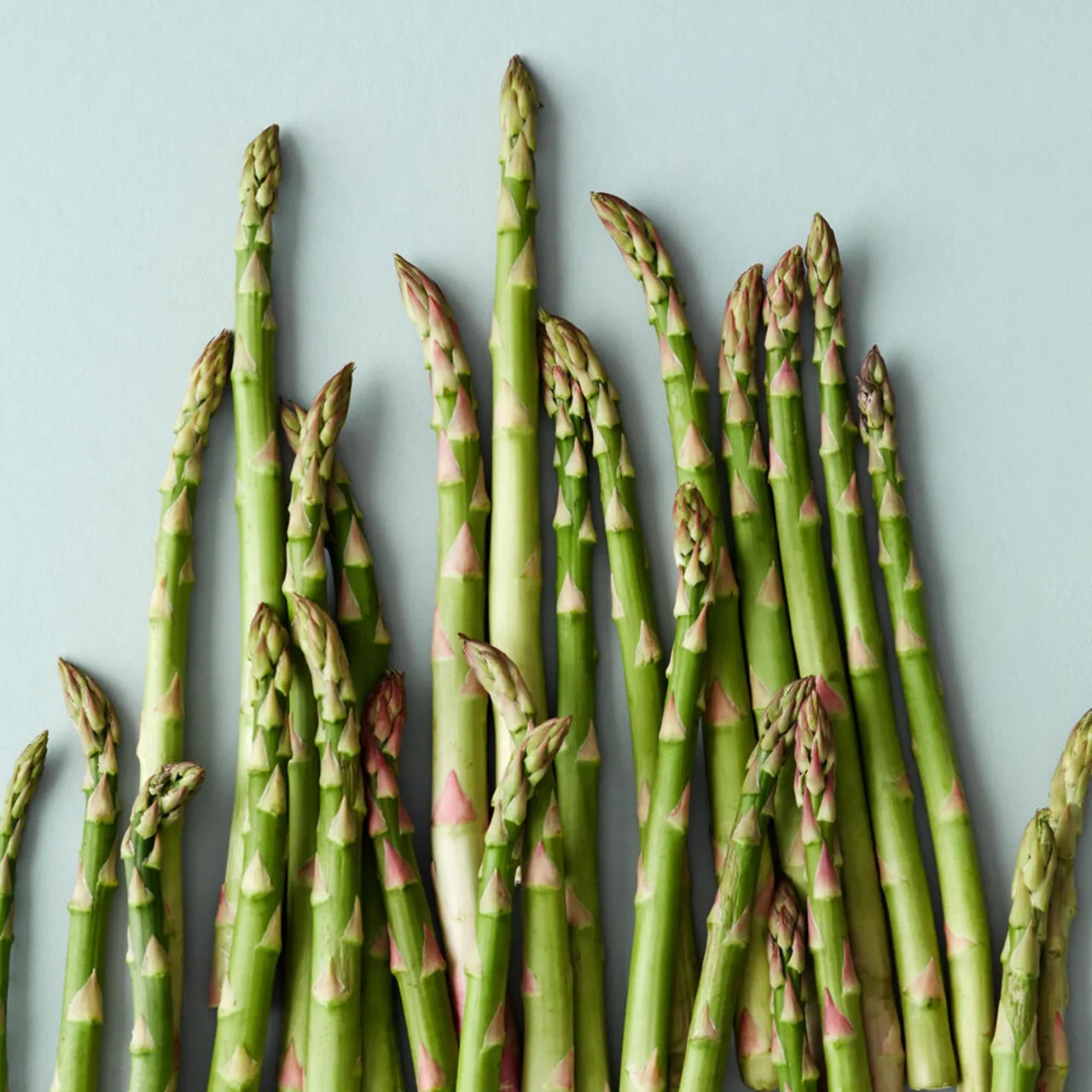
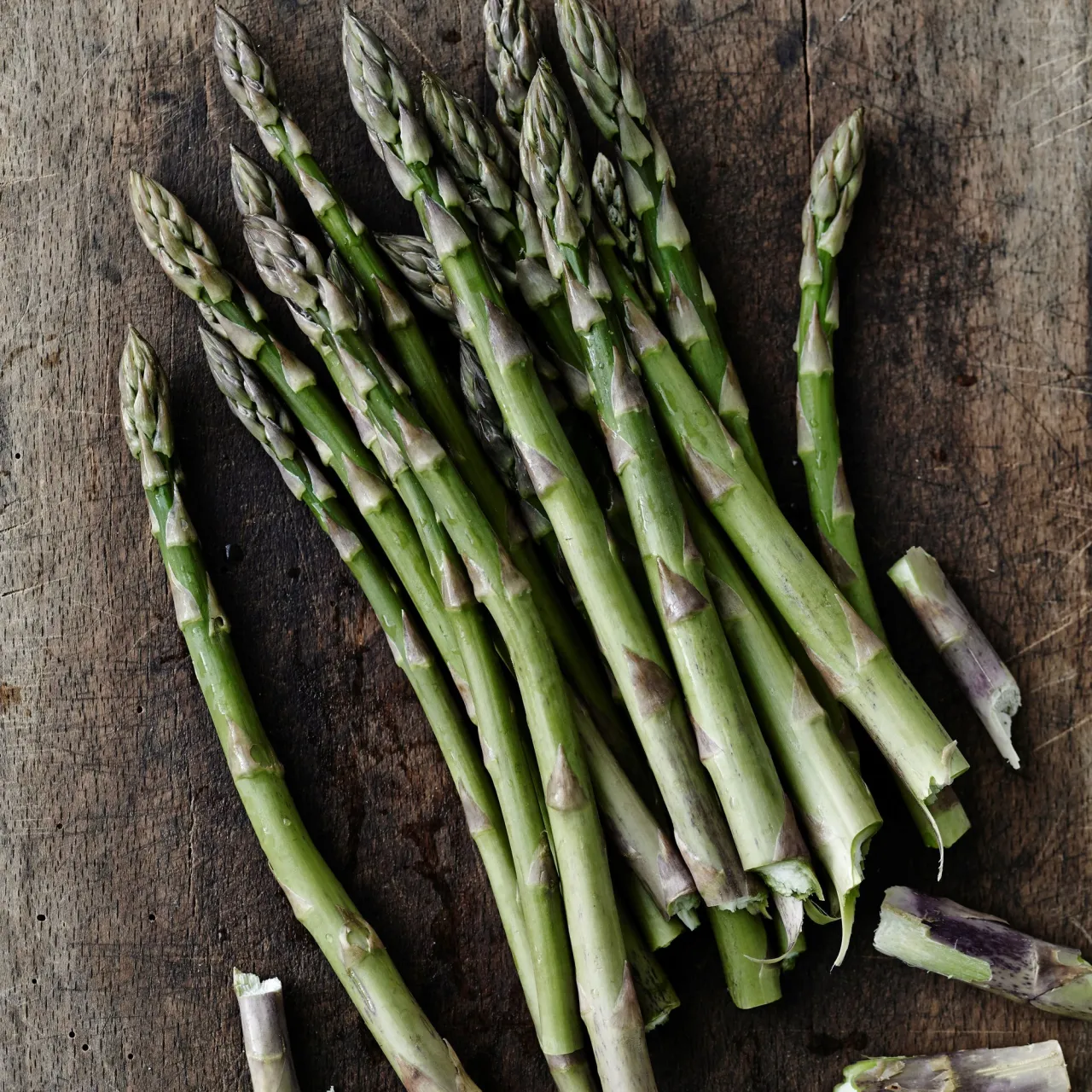
While white asparagus grows underground, green asparagus are the shoots of the asparagus plant that grow above the soil. Green asparagus has a short season and should be enjoyed as the refined spring delicacy it is while it is here – which means in May and sometimes into June. Unlike its white relatives, green asparagus does not need to be peeled – just snap off the woody bottom part, and then give it a very short cooking time.
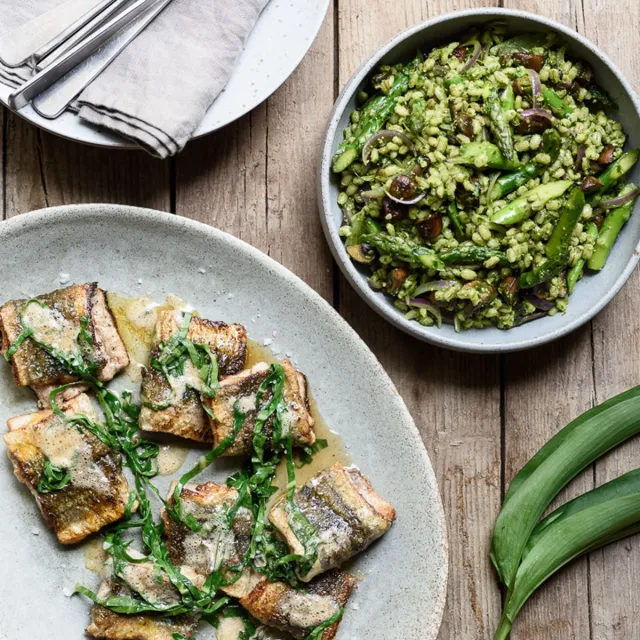
You can steam them briefly and drizzle them with excellent cold-pressed rapeseed oil, or quickly grill them and serve them with shavings of firm cheese such as hay cheese or Vesterhavsost. You can eat them with fjord shrimp and smoked cheese cream, use them in a creamy barley risotto (“bygotto”), or simply enjoy them raw as a snack.
Read along as we guide you through the very best recipes that bring out the best in spring asparagus.
“ Green asparagus contains virtually no calories, but plenty of fiber, which provides a good sense of fullness. In addition, asparagus is rich in minerals and vitamins, including folate, which has disease-preventing properties.
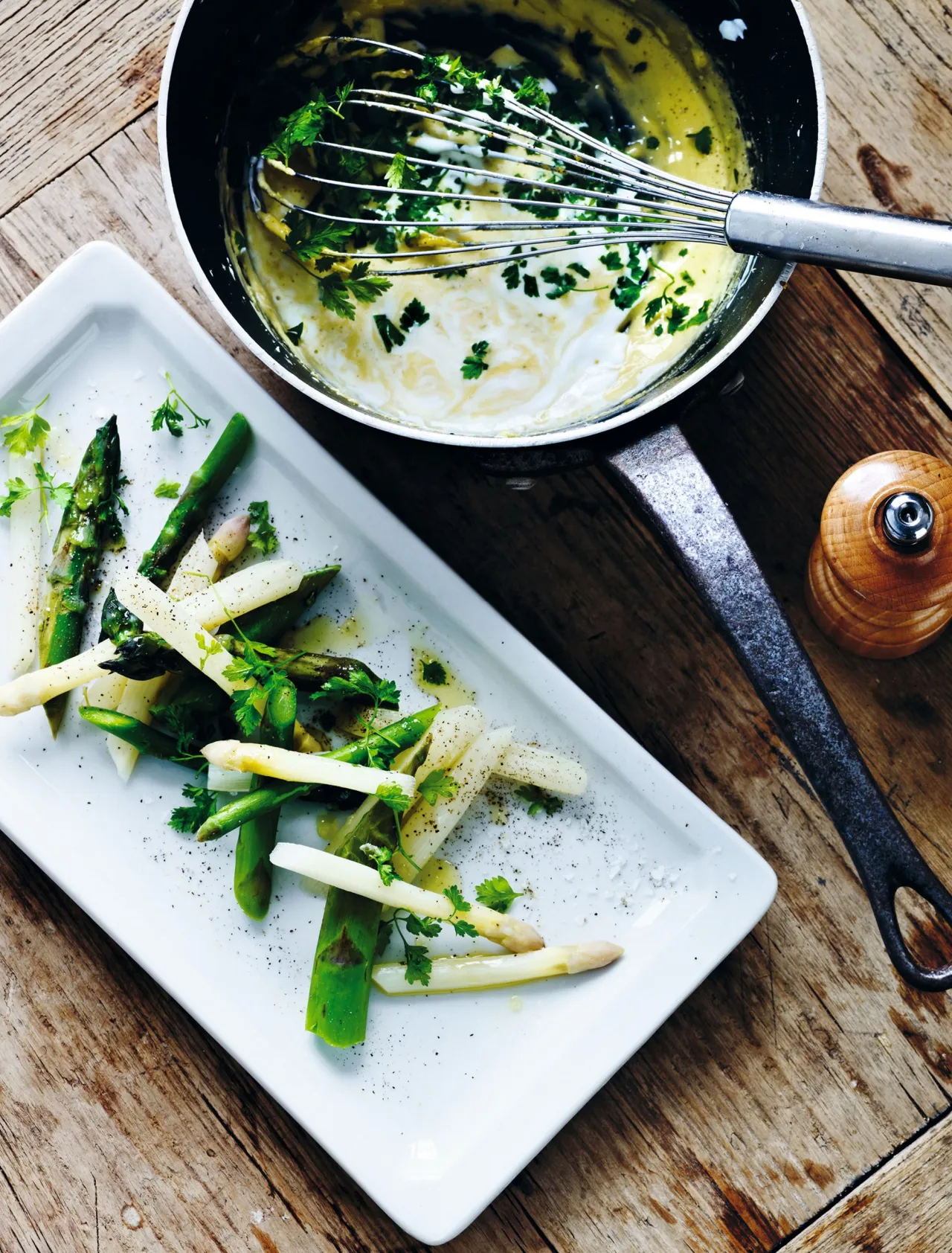
Asparagus with chervil mousseline
8 white asparagus
8 green asparagus
sea salt
1 tsp sugar
Prepare the asparagus – peel the white ones, and snap off the woody ends of both the white and green asparagus. Bring a pot of water, salt, and sugar to a boil, but wait to cook the asparagus until the mousseline sauce is ready and your guests are seated at the table.
First boil the white asparagus for 2–3 minutes, then the green for 1–2 minutes. Asparagus varies in thickness, and white asparagus generally needs a bit longer cooking time than green. Transfer the asparagus directly to cold water to preserve their color and freshness, then remove them immediately so they do not lose too much heat. Let them drain briefly on a clean cloth.
Chervil mousseline
3 egg yolks
2 tbsp cider vinegar
2 tbsp water
sea salt
180 g butter
1 bunch chervil (a little for garnish)
freshly ground pepper
½ dl whipping cream
Whisk the egg yolks, vinegar, water, and a bit of salt over a bain-marie until it becomes creamy and you can draw “lines” in the foam. Gently melt the butter.
Whisk the butter into the eggs in a thin stream while whisking, until all the butter is incorporated and the sauce is rich and smooth. Season with plenty of chopped chervil, salt, pepper, and possibly a bit more vinegar.
Lightly whip the cream and fold it into the mousseline at the last moment just before serving – this makes the sauce light, airy, and creamy. Serve the chervil mousseline with the warm asparagus as a wonderful start to a May dinner, together with good bread.
It is said that the Danish asparagus season lasts until Midsummer. And this is not just an old myth – it simply has to do with the fact that harvesting beyond this point risks weakening the plants too much, which can affect future yields.
There are many possibilities, and asparagus can easily take center stage on the plate alongside other summer vegetables, meat, and fish – or be used in spreads, summer stews, or crisp salads.
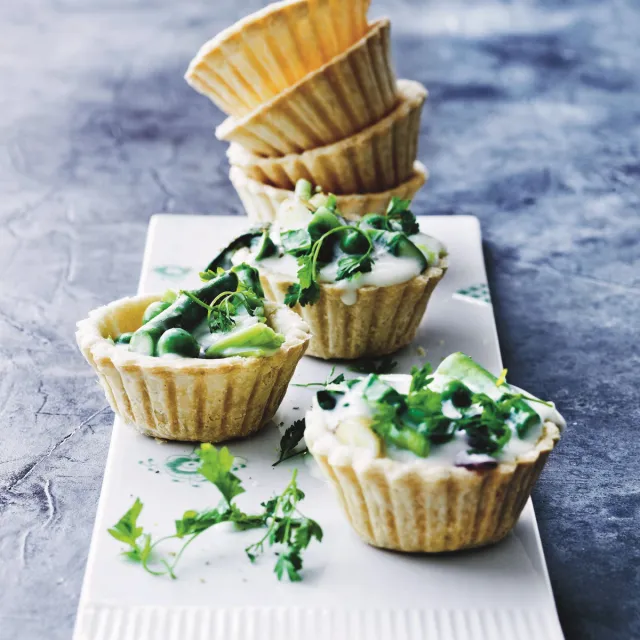
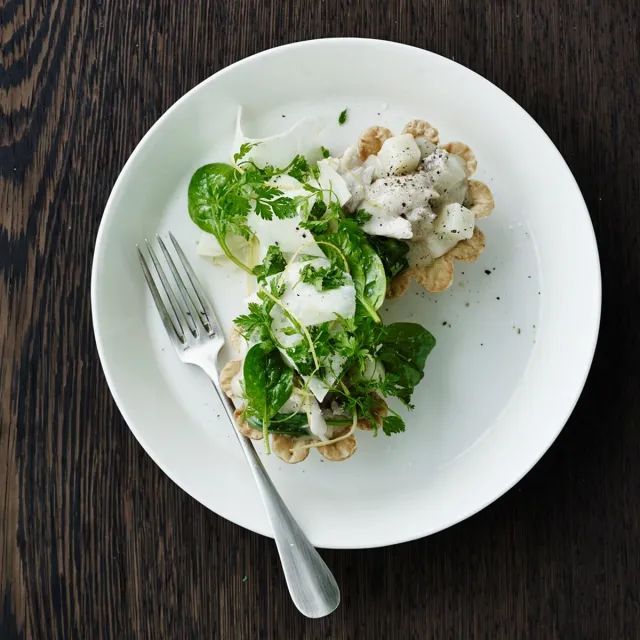
Tartlets are a true grandmother classic that brings joyful nostalgia to the plate for many.
You can give your buttery tartlets a spring feel by serving them with seasonal green and white asparagus in a light creamy sauce with plenty of chervil on top.
“ Asparagus actually belongs to the lily family, and it is the young shoots we eat, as one of spring’s first and finest field-grown delicacies.
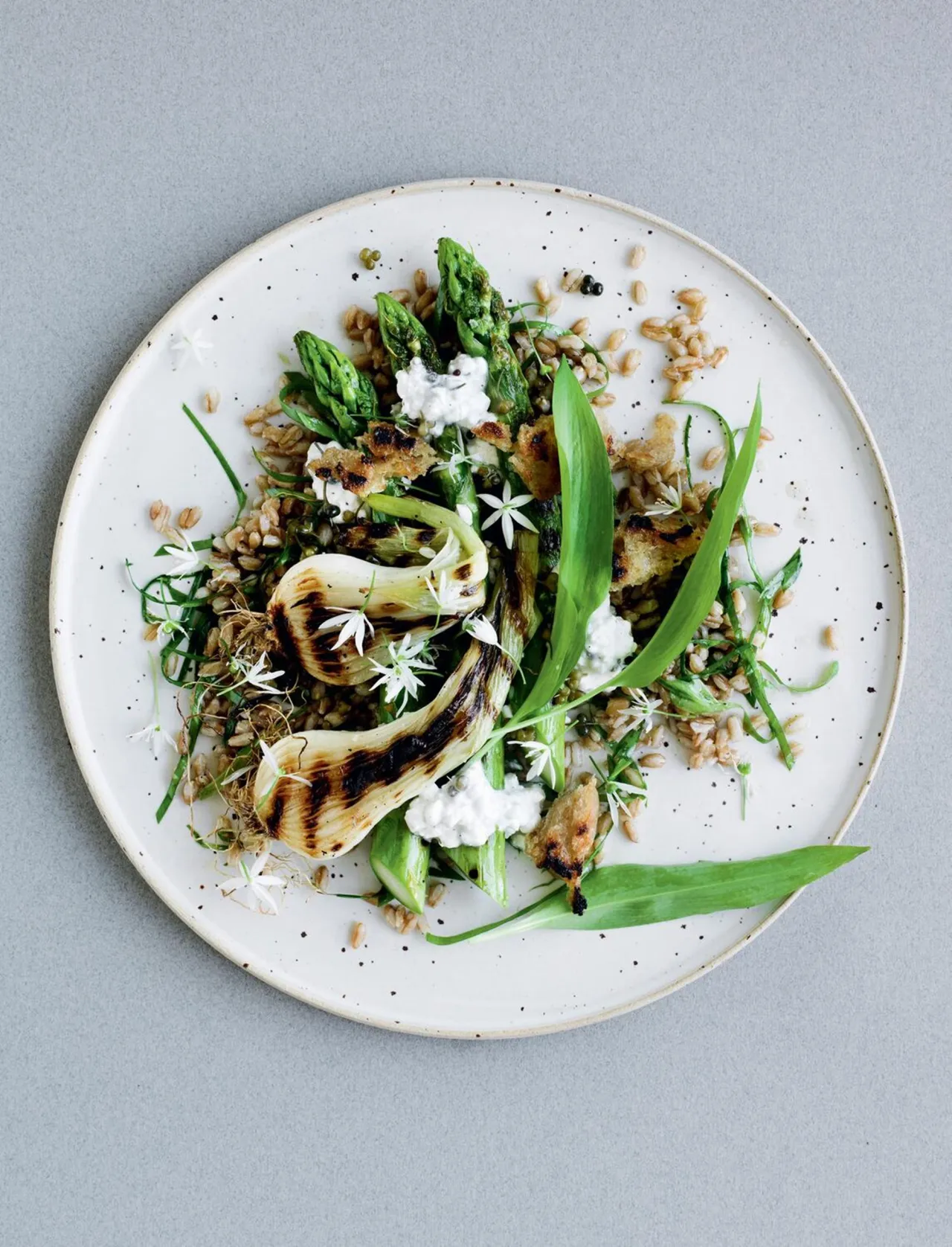
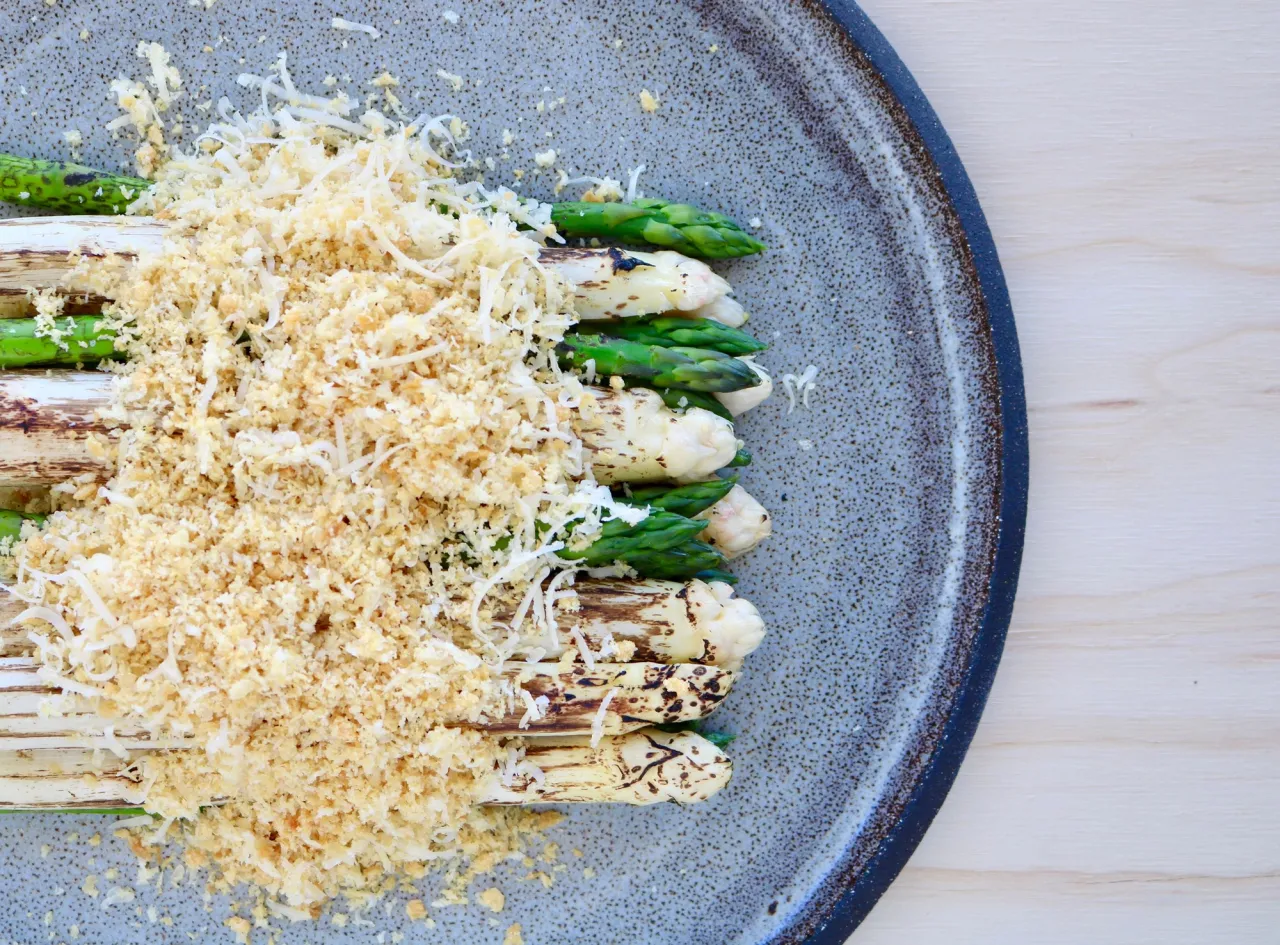
A rich and hearty gratin with some of spring’s finest ingredients. A lovely, solid alternative to lighter dishes with steamed white asparagus. It is also a great way to make good use of asparagus that may not be of absolute top quality.
RecipeIt is not just the color that differs between the two types of asparagus, but also how they are grown. White asparagus thrives underground, where it is cultivated in raised beds. Green asparagus, on the other hand, emerges above the soil and develops its green color through exposure to daylight.
Due to labor costs, white asparagus is significantly more expensive than green asparagus and is considered a special delicacy.
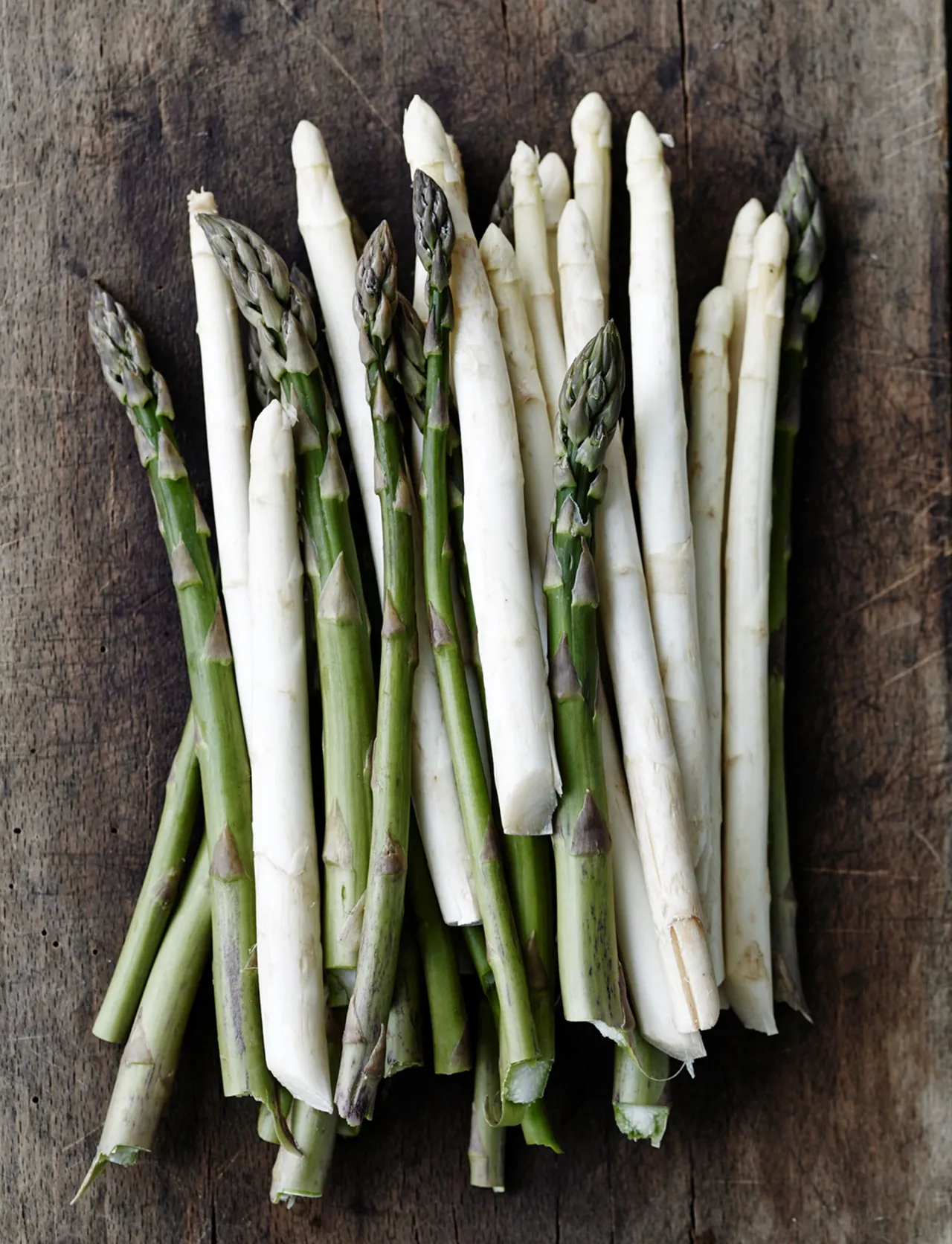
If your guests are not ready to eat the asparagus the moment you take them out of the boiling water, place them on a dish lined with a cloth napkin or kitchen towel, close the cloth around them, and pour a little of the hot cooking water over it—this will keep them warm until everyone is seated.
How to keep the bite
Green asparagus only needs to cook for 1–2 minutes, whereas white asparagus is often larger and a bit tougher, so it needs about twice as long – 2-3 minutes – to retain the perfect snap.
Perfect green asparagus
Green asparagus does not need to be peeled – just snap it to remove the slightly woody base, which is far less tough than that of its white relative.
Asparagus pairs beautifully with summery herbs such as chervil, dill, or tarragon. Drizzled with melted butter and seasoned with freshly ground pepper, you have a heavenly bite in just a few minutes.
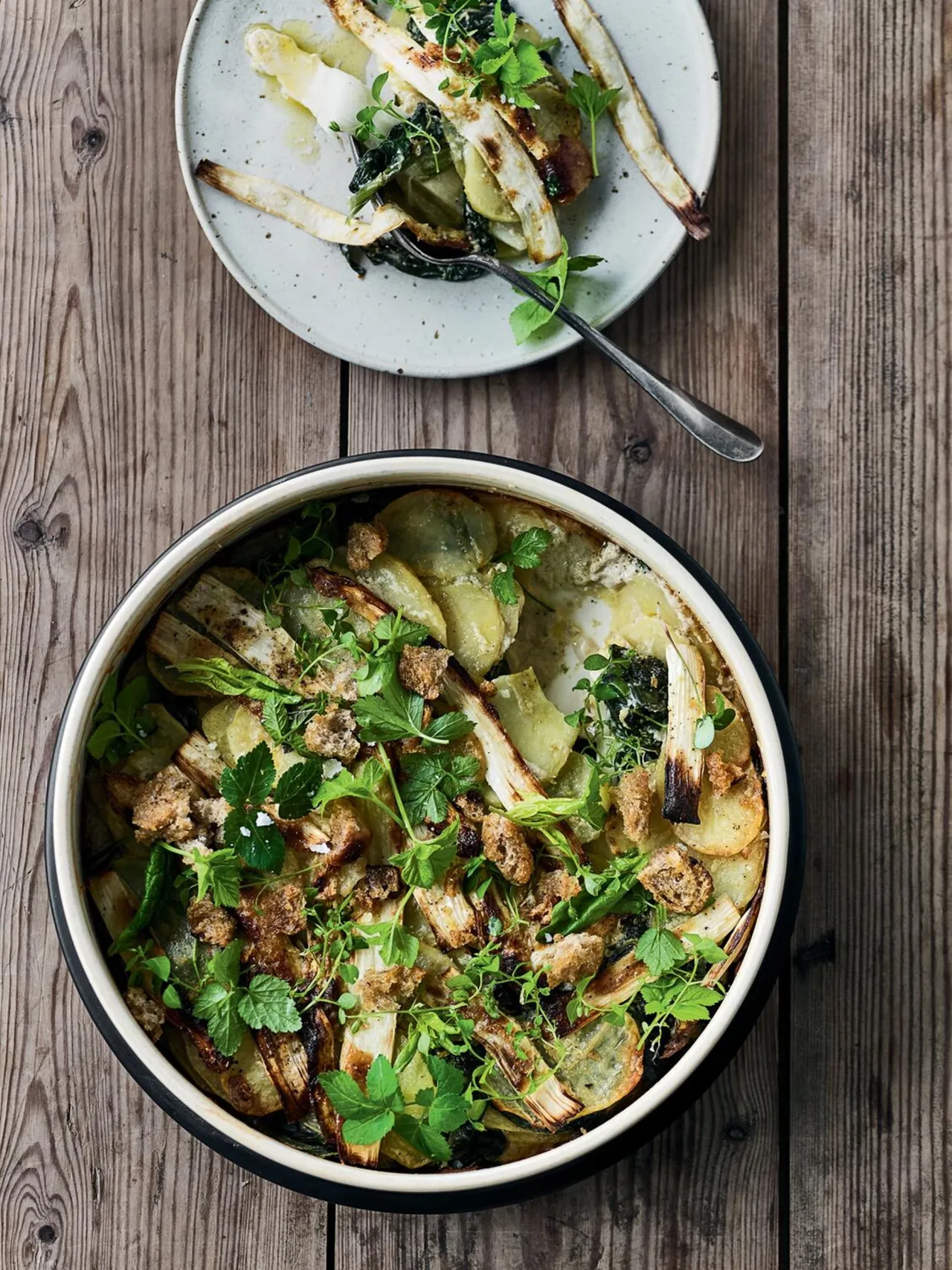
A rich and satisfying gratin with some of spring’s most delightful ingredients. And a wonderful, hearty alternative to lighter dishes with steamed white asparagus. It is also a good way to make use of asparagus that may not be in perfect condition.
RecipeHold dig opdateret
Få de bedste opskrifter, tips fra kokkene og nyheder om alt det der spirer i Meyers' univers.