Tilmeld dig vores nyhedsbrev
Få de bedste opskrifter, tips fra kokkene og nyheder om alt det der spirer i Meyers' univers.

Good bread can make a meal. That's why we serve freshly baked wheat and rye bread with your lunch. Our bread comes with a significant whole grain content, long proofing times – and not least, sourdough!
Sourdough adds a delicate acidity, it extends the shelf life of bread, and it makes the nutrients from the grain more readily available. The benefits of using sourdough are many. If you're dreaming of embarking on your own sourdough adventure, you may find this starter guide useful.
A sourdough starter is essentially a mixture of water and flour that builds up certain almost magical qualities, as you keep it and tend to it between bakes. A sourdough starter works wonders in your bread dough – adding leavening power, flavor, and aroma, as well as extending the life of your bread after it is baked. Sourdough is tart in flavor because it contains lactic and acetic acid, produced by lactic acid bacteria: these find their way to the sourdough naturally from the surroundings – along with the all-important natural yeasts. The yeast is what – if all goes well – causes the dough to rise by releasing carbon dioxide during the fermentation.
The starting point for the sourdough we use is equal parts flour and water. The flour should always be fresh, and a portion of it should be wholemeal flour. This is because the so-called bran and germ from the grain is retained in wholemeal flour – and that’s where most of the essential bacteria and yeasts reside.
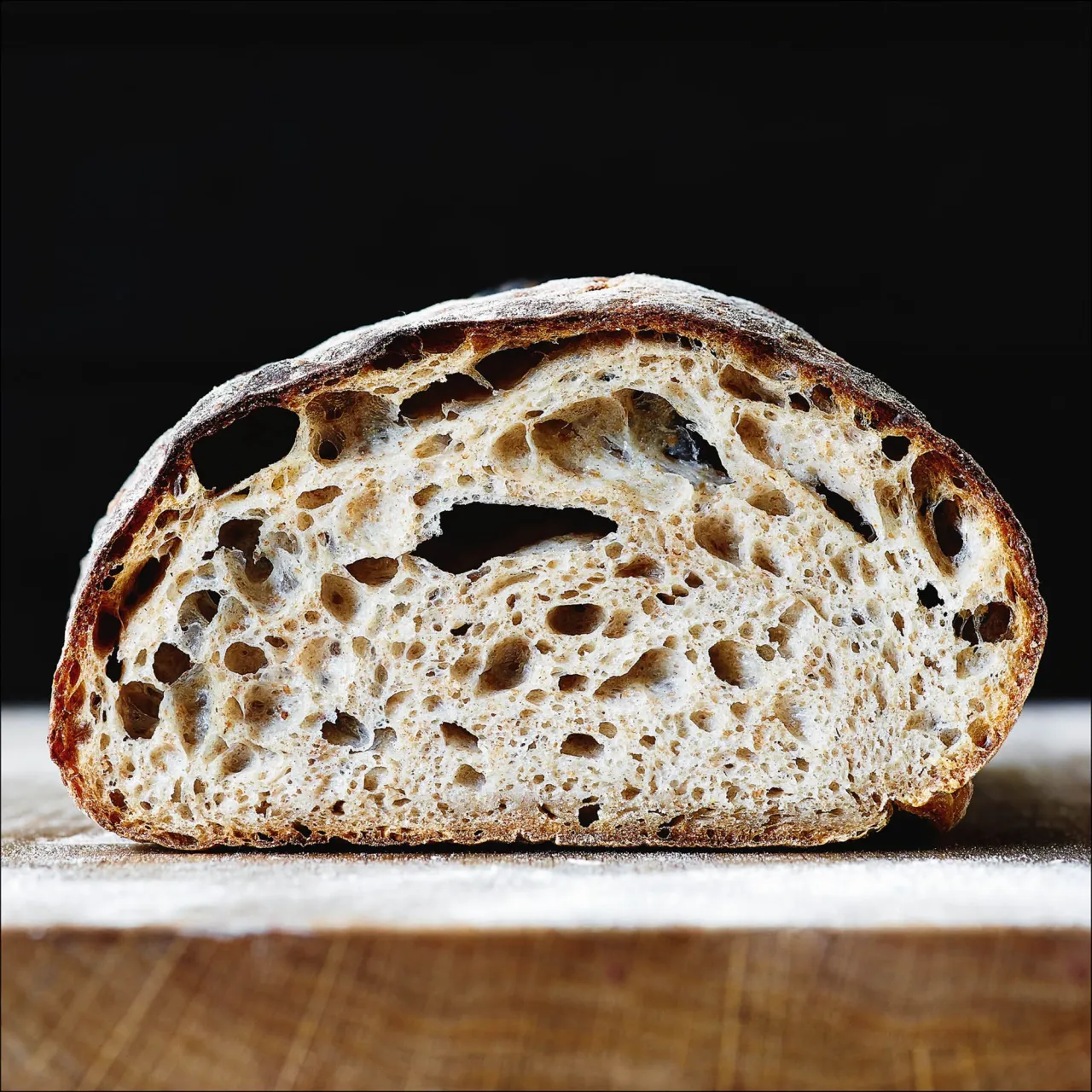
When you mix flour and water and let it sit for a few days it will take on a sour taste and a smell kind of like beer. When that happens, you have a culture of wild lactic acid bacteria and yeast on your hands. The yeast is what causes the dough to rise, while the lactic acid bacteria primarily provide the acidic taste that we know and love in sourdough bread – a flavor that beautifully complements the grain's aromas and sweetness. The lactic acid bacteria also help the yeast thrive and keeps unwelcome bacteria away.
With just flour and water – and a little patience – you can create your own sourdough starter that will serve as a leavening agent as well as add flavor and aroma to your bread. You will need:
100 g water (28-30 degrees C)
80 g plain flour
20 g wholemeal flour
Stir the flour and warm water together in a suitable glass or plastic jar with a loose-fitting lid. Leave the mixture in the warmest place in your kitchen. Typically, after 3-4 days the sourdough starter will develop from a dull flavorless paste to an active sourdough culture with a distinct beer-like smell and sour taste. While you're waiting for this to happen, stir the sourdough once or twice a day, making sure to scrape the edges down.
You've reached your goal when the sourdough no longer smells like raw dough, but something like yogurt, buttermilk, or beer – and when it tastes sour (around yogurt level).

You now need to feed your sourdough repeatedly until it is 'strong' enough to bake with. For feeding your sourdough starter you will need:
20 g "old” sourdough
80 g plain flour
20 g wholemeal flour
100 g water (28-30°)
Take a container like the one you have your sourdough in and put 20 g of your sourdough in the new container. Mix it with 100 g warm water (28-30°), 80 g wheat flour and 20 g whole wheat flour – until lump-free – and put it back in a warm place. Wrap a rubber band or a piece of tape around the jar at the edge of the mixture within. This will help you monitor how much it rises later. After typically 3-4 hours in a warm place – or 6-9 hours at regular room temperature – the sourdough will have risen to its peak, and it will start to fall again. You should repeat this process until the rise gets up to at least twice its height – or until it can pass a float test as described below. Even if this happens after just a few days, it is better to continue for at least a week before you start baking with the sourdough to ensure you have a strong culture of yeast and bacteria.

If you are unsure whether your sourdough is ready, you can do a float test: Take a glass of water. Gently tip a tablespoon of your sourdough starter in the water. If the sourdough immediately floats to the top, it is ready. If it’s a little hesitant to rise but still reaches the surface you can out it to use, but expect prolonged rising times.
Bagning
At bage sammen med børnene er en fantastisk måde at tilbringe tid sammen på. Med nemme opskrifter, som børnene kan være med til at lave, bliver det både sjovt og lærende. De kan hjælpe med alt fra at røre dejen til at pynte de færdige kager, og det er en skøn mulighed for at stimulere deres kreativitet. Samtidig får I noget lækkert og hjemmelavet ud af det, som alle kan nyde. Det er en sjov aktivitet, der giver både børn og voksne gode minder i køkkenet.

Bælgfrugter
Kvalitetsbrødet går sin sejrsgang, og i dag findes mikrobagerier overalt i Danmark, der flittigt sender dig hjem med et økologisk, velafbagt surdejsbrød under armen. Sådan har det ikke altid været. Over de sidste 5-10 år har flere aktører i det danske bagefællesskab delt en fælles vision om at få bedre brød på bordet. Nogle taler sågar om en regulær brødrevolution, der slog trivielle trekornsbrød og ernæringsfattige rundstykker af pinden. Men hvad er næste trin på innovationsstigen i jagten på nye brødoplevelser? Bælgfrugter kunne være en del af svaret. For hvad sker der, når man giver dejen selskab af hvide bønner?
raavarer

Hold dig opdateret
Få de bedste opskrifter, tips fra kokkene og nyheder om alt det der spirer i Meyers' univers.